Trematode parasitism increases mortality in marsh ramshorn snails Planorbella trivolvis exposed to repeated low-dose copper sulfate treatments in laboratory trials
Sep 15, 2025· ,,,,,,,,,,·
0 min read
,,,,,,,,,,·
0 min read
Bradley M. Richardson
Charles C. Mischke
Thomas G. Rosser
Sujita Balami
Celene M. Slifka
Divya Rose
Ambika Tiwari
Monica L. Wood
Geoffrey C. Waldbieser
David J. Wise
Matt J. Griffin
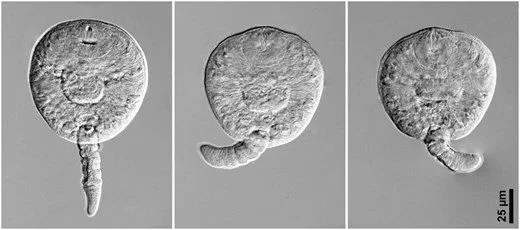 Image credit: MJ Griffin
Abstract
Objective Controlling the trematode Bolbophorus damnificus in catfish aquaculture relies on disrupting the parasite life cycle by targeting the snail intermediate hosts. Copper sulfate pentahydrate (CSP) is a common and effective molluscicide but can have adverse effects on fish health. In laboratory studies designed to improve safety and optimize CSP treatments, nontreated wild-caught snails have demonstrated poor survival. This may indicate poor snail vigor from handling and transport, environmental stressors, or trematode parasitism. Here, CSP toxicity to marsh ramshorn snails Planorbella trivolvis was compared between laboratory-reared snails and wild-caught individuals (i.e., from catfish ponds), which were further divided into individuals actively shedding trematode cercariae and those not actively shedding cercariae.
Methods Given the relatively low prevalence of B. damnificus in snail populations, snails that were parasitized with a more common trematode, Alloglossidium kenti, served as a proxy for the effects of trematode parasitism on marsh ramshorn snails exposed to CSP. Two trials consisted of four weekly treatments of varying CSP concentrations.
Results In both trials, survival curves and hazard analysis revealed that laboratory-reared snails were most resistant to CSP, followed by nonshedding pond snails. Pond snails that were actively shedding A. kenti cercariae were most sensitive to CSP treatment.
Conclusions Increased susceptibility of parasitized snails to lower CSP doses demonstrates a potential targeted approach that would be selective against parasitized snails within catfish pond systems. Therefore, complete eradication of marsh ramshorn snails from catfish ponds may not be necessary for effective trematode control, and lower doses than those previously reported may prove effective at mitigating trematode-associated losses in U.S. catfish aquaculture.
Type
Publication
North American Journal of Aquaculture, 87(4)